

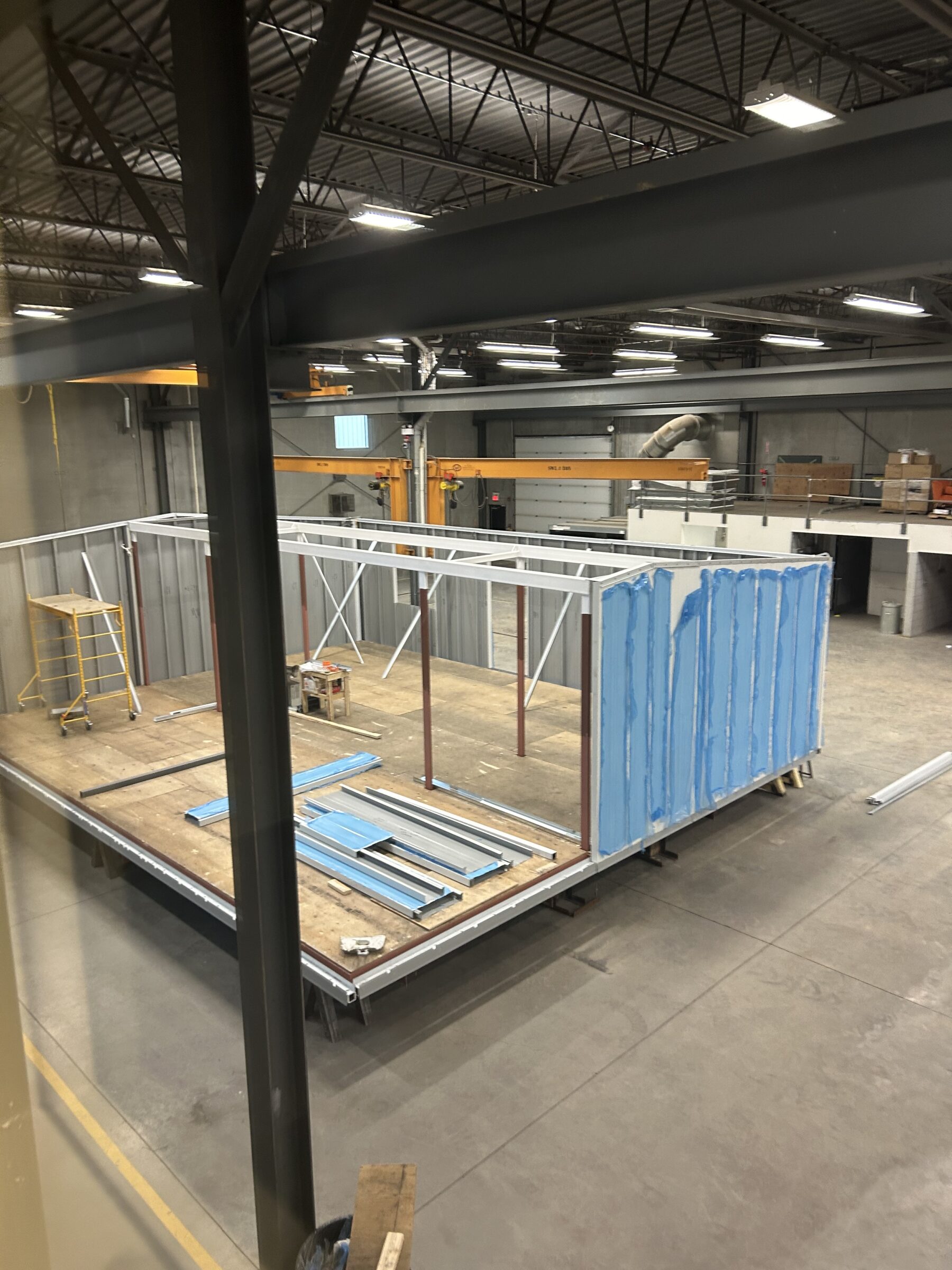
NCC Development Ltd. will bring modular homes to Grise Fiord, Kugaaruk and Qikiqtarjuaq this summer. The homes are built by Calgary-based SEED-Homes Inc. An example of one of the modular homes being built is seen here. (Photo courtesy of SEED-Homes Inc.)
NCC Development bringing 6 modular homes to Nunavut
Buildings ‘can really take a pounding’ due to steel construction manufacturer says
5 min readNCC Development Ltd. announced plans to purchase six modular homes that will be delivered to Nunavut this summer.
The structures will be bought from Calgary’s SEED-Homes Inc., which specializes in building and shipping steel-based modular homes.
The purchase is part of NCC Development’s commitment with Nunavut Housing Corp. to create 3,000 new homes by the end of the decade under the Nunavut 3000 program, NCC Development president and CEO Clarence Synard said in an interview.
The communities of Grise Fiord, Kugaaruk and Qikiqtarjuaq will each receive two of the homes, he said.
Each of the modular homes will be 1,152 square feet in size, roughly equal to a standard two or three-bedroom apartment.
A news release announcing the purchase said NCC Development chose SEED-Homes because of how well-suited the modular homes will be to Nunavut’s climate.
The homes “can really take a pounding” because they are built with 22-gauge steel, SEED-Homes CEO Stephen Morgan told Nunatsiaq News.
The homes can be installed on above-ground screw piles, the news release noted.
“I think they’re a perfect fit” for Nunavut, Morgan said.

This shows an example of the interior of one of SEED-Homes’ modular units. (Photo courtesy of SEED-Homes Inc.)
He said the price of SEED modular homes is about 40 per cent of the cost of building a traditional Canadian home.
Synard declined to discuss the cost, but said that because SEED-Homes’ modular homes can fold up to be shipped, NCC Development can save up 60 per cent on shipping costs.
He called that “a bit of a game changer.”

Morgan compared the way the homes can be folded for shipping to the way the pages of a book close on top of each other.
When the home gets unfolded, he said, areas such as the kitchen and bathroom are already set.
The purchaser can decide where to place the walls in the rest of the living area, so the space is flexible in how many bedrooms or rooms can be accommodated.
Asked why NCC does not make modular homes using sea cans that already in Nunavut, Synard said the ones available in communities are not typically in the best condition to be transformed into reliable homes.
Including that factor, it is too costly to transform them into sturdy, well-insulated homes compared to a traditional build.

“I’m not saying we’re never going to get there, I just don’t think from a cost perspective that we’re there yet,” Synard said of converting community sea cans into usable homes.