
Over 90% of Crisis Cases in Nunavik Managed Without Arrest or Hospitalization
Suicidal crises, alcohol intoxication and domestic violence among reasons for interventions

Pictured from left is Sgt. Olivier Blanchette and Const. Michael Simpson of the Nunavik Police Service, and Lukasi Whiteley-Tukkiapik and Ariane Richard from Saqijuq at the mobile crisis intervention team launch in Kuujjuaq in August 2025. New data shows more than 90 per cent of cases in 2025 were resolved in Kuujjuaq and Puvirnituq without judicial action as Saqijuq looks to expand the program across Nunavik. (Photo courtesy of Facebook/Saqijuq)
Mobile intervention teams in Puvirnituq and Kuujjuaq kept most crisis situations out of the justice system in 2025, with more than 90 per cent of cases requiring no judicial action, new data shows.
Saqijuq, a Nunavik-based organization that promotes community safety, launched the mobile intervention program in Puvirnituq in 2019, then in Kuujjuaq in 2025.
These teams work with the police to respond to calls involving mental health crises, domestic violence, suicide prevention and children and youth at risk.
“With the success of this program, we’d like to extend it to other communities,” said Saqijuq executive director Lukasi Whiteley-Tukkiapik.
“We believe it’s going to make a big difference.”
From January to December, the team in Puvirnituq responded to 557 crisis calls. About 507 of those cases were handled without involving the justice system, while about 17 resulted in arrest and 33 in involuntary hospitalization.
Of the 190 interventions done in Kuujjuaq between August—when the team was launched—and December, about 177 didn’t involve the justice system, 8 ended in arrest and 4 in involuntary hospitalization.
Under Quebec Law, also known at P-38, a person who is mentally ill and poses an immediate danger to themselves or others can be hospitalized without their consent to be evaluated.
“P-38 could be very traumatic to a person,” Whiteley-Tukkiapik said. “I remember in the past, it used to happen quite often and it was really unfortunate.”
He said this number has decreased over the years with most cases being resolved within the community, meaning mobile teams stabilized the crises and connected people to local services.
In 2024, the number of cases that resulted in involuntary hospitalization was even lower, with 12 out of 595 interventions, according to Saqijuq’s 2024 annual report.
This data highlights issues of mental health challenges, substance use, youth vulnerability and domestic conflict, Whiteley-Tukkiapik said.
In Puvirnituq, suicidal crises were the most common reason for intervention, making up a third of cases. In Kuujjuaq, alcohol was the top reason, followed closely by domestic violence and family-related crises.
“In the last couple of years, we’ve been seeing harder drugs coming into the region but one thing that hasn’t changed is the social issues we face every single day,” Whiteley-Tukkiapik said.
”What I’m happy to see is the shift that the communities are saying this is a big problem that we need to face now.”
On Dec. 3 last year, Kuujjuaq council held a town hall meeting to confront the rise of hard drugs in the community and brainstorm solutions ranging from airport searches to more activities for youths.
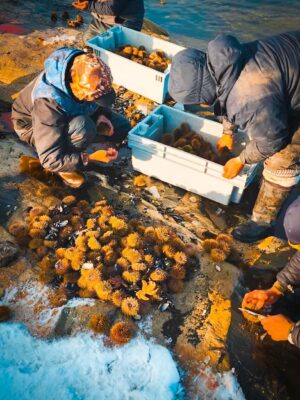
Mussel picking in Inukjuak organized by the On-The-Land team aimed at creating safe and healing spaces where people can learn new skills and feel like a part of a community. (Photo courtesy of Facebook/Saqijuq)
Saqijuq does prevention work as well to address these underlying issues including its On-The-Land Program first launched in Puvirnituq in 2016, said Maude-Émilie Drolet, program development director.

The program is now in six additional communities: Akulivik, Inukjuak, Kangiqsualujjuaq, Kangiqsujuaq, Kangirsuk and Kuujjuaq. It offers activities such as hunting, fishing, harvesting, berry picking, traditional skills transmission, mechanical and woodworking workshops.
The teams also do patrols and visit different community spots to engage with people and inform them on the risks of substance use.
“It’s not always promoting abstinence but also promoting safe habits of consumption, if that’s the decision they take,” Drolet said.
After interventions, there are follow-ups to explain what happened during a crisis and guide people on how to create safety and reduce risk for themselves and others.
Salluit will be the third community to receive a mobile intervention team, but no date has been set. Whiteley-Tukkiapik said Saqijuq is targeting the big communities first with the goal of expanding to the smaller ones as well.
(0) Comments