Teacher education program expanded to more Nunavut communities
More post-secondary students will be able to study in their hometowns starting this September, says education minister
5 min read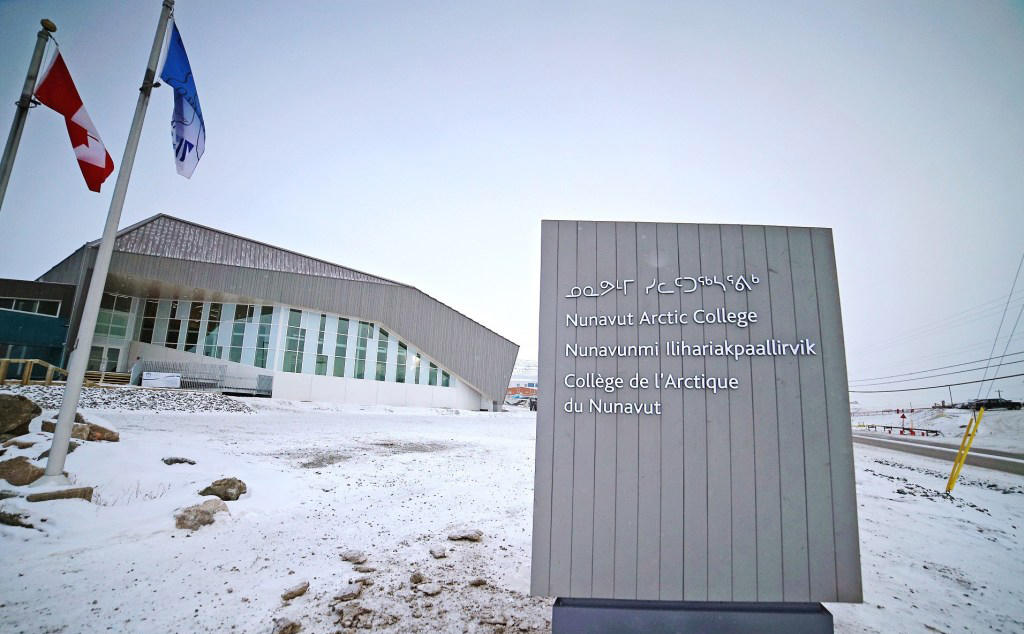
In September, Nunavut Arctic College will begin offering its teacher education program in 10 new communities in the territory, adding to the 10 already offering the program, said Education minister Pamela Gross earlier this month. (File photo/NAC)

More post-secondary students across Nunavut will soon have the chance to earn part of the bachelor of education degree without leaving their home communities.
Earlier this month, territorial Education Minister Pamela Gross announced that starting in September, Nunavut Arctic College will begin offering the first year of its teacher education program in Arctic Bay, Chesterfield Inlet, Kinngait, Kugluktuk, Kugaaruk, Pond Inlet, Qikiqtarjuaq, Sanirajak, Taloyoak and Whale Cove.
This is in addition to 10 communities already offering the first two years of the five-year program: Arviat, Baker Lake, Cambridge Bay, Coral Harbour, Gjoa Haven, Igloolik, Iqaluit, Naujaat, Pangnirtung and Rankin Inlet.
Students enrolled in the program get the first two years of instruction through Nunavut Arctic College, then continue their remaining three years at Memorial University in Newfoundland to earn a bachelor’s degree in education.
Offering the program in more Nunavut communities will help more students commit to their studies and alleviate the challenges of moving away for school, said Peesee Pitsiulak, dean of education, Inuit and university studies at Nunavut Arctic College.
“Housing has always been an issue, and people are holding on to their homes and do not want to lose their homes while they’re away at school,” she said. “So [students] will have a lot more chances to enter the program in their home community.”
In 2021, the program was also restructured to offer the first two years at the college entirely in Inuktut, part of a wider effort to strengthen the use of Inuit languages in the territory.
“I believe bilingual education [is] the ultimate goal for our teachers, to be able to teach in either language,” she said.
“A lot of the courses in year one and two are courses that were already taught in the program before, but we added more [Inuktut] courses so that our graduates will be able to have a lot more knowledge and experience in a new language and culture to teach.”
It also means students have the option to leave after two years and become language teachers in schools, earning a diploma from the college in Inuit language and culture, Pitsiulak said.
“I think with a new program where the first two years are on Inuit language and culture, our students will be able to have more confidence teaching their culture or their language instead of having had sporadic language courses over the four-year program in the past,” she said.
The program also offers an immersion stream for students who don’t speak Inuktut as a first language, to help them catch up to the language requirements, she added.
“The territory is always in need of teachers, as we all know, and this should be able to help in that situation — our graduates are more likely to stay in their home territory and not leave after a couple of years.”