
‘What a day this is:’ Iqaluit hydroelectric plant could be ready 3 years sooner than expected
Fast-track approval could see plant working by 2030, proponent leader says
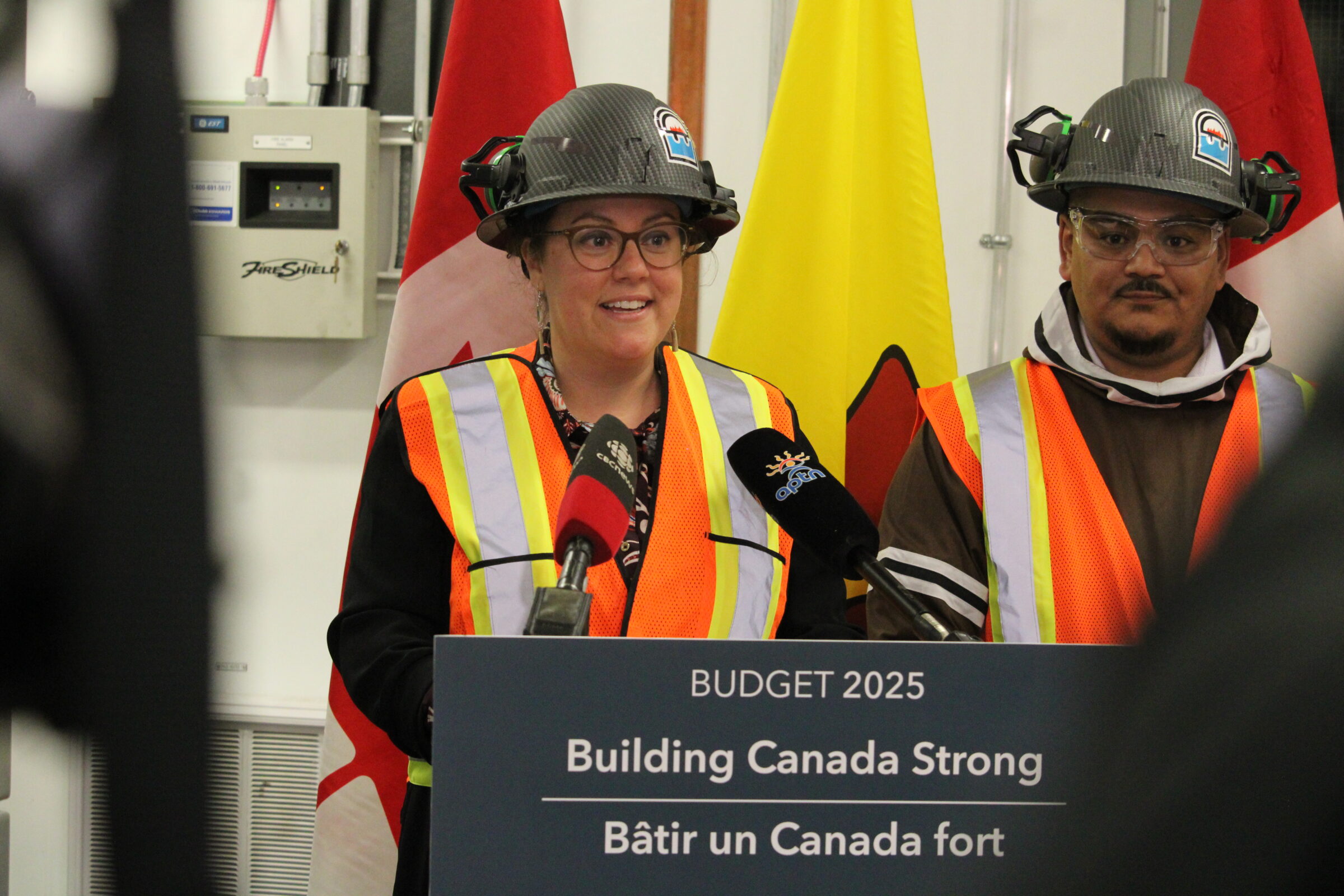
Crown-Indigenous Relations Minister Rebecca Alty, left, speaks alongside Nunavut Tunngavik Inc. president Jeremy Tunraluk at the Iqaluit power plant on Thursday. She announced the Iqaluit hydroelectric project will be fast-tracked for approval as a nation-building project. (Photo by Arty Sarkisian)

A hydroelectricity plant to be built to provide power to Iqaluit will create “hundreds” of jobs, cut greenhouse gas emissions and boost the city’s economic resilience, says the federal minister for Crown-Indigenous Relations.
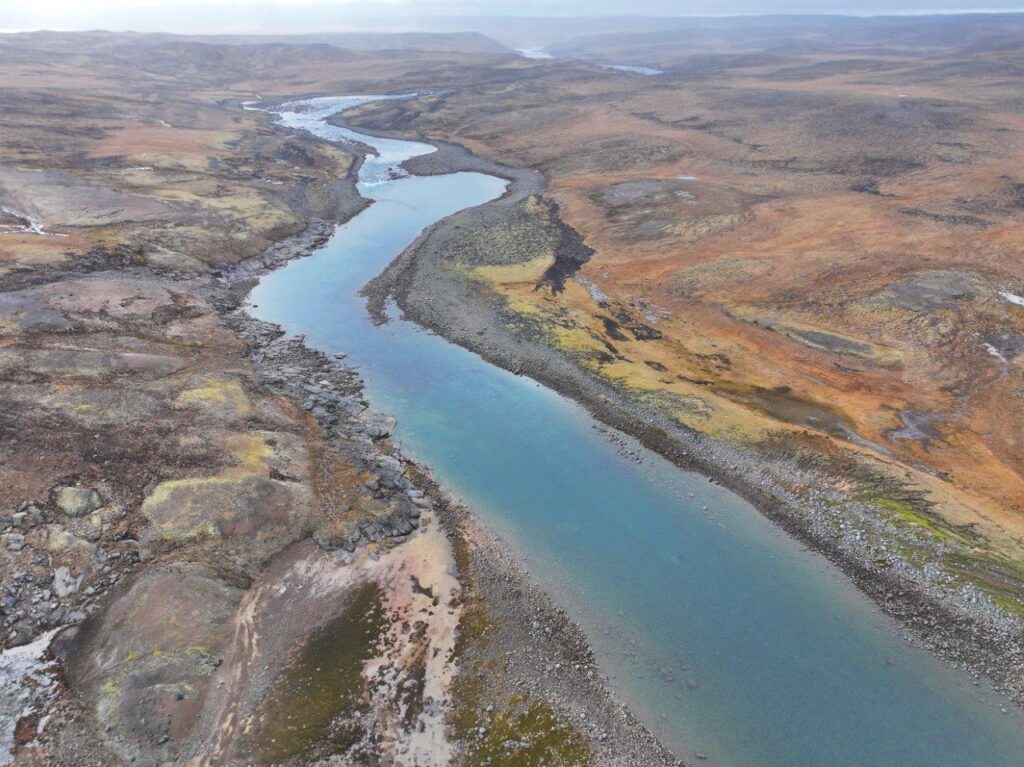
The proposed Iqaluit hydroelectric project with a 50-metre-high dam and a powerhouse along the Kuugaluk River made the federal nation-building projects list on Thursday. (Photo courtesy of Nunavut Nukkiksautiit Corp.)
Rebecca Alty spoke about the project in Iqaluit late Thursday afternoon, just hours after Prime Minister Mark Carney named the Iqaluit Nukkiksautiit Hydro Project as one of six new “nation-building” projects the federal government wants to fast-track for approval.
“This is an important milestone for sustainability, for our economy and for Arctic sovereignty, and a major step forward for reconciliation and Inuit economic leadership,” Alty said, talking over the buzz of electrical feeders during a news conference inside Iqaluit’s diesel-driven power plant.
The project must still go through the territorial permitting process and the Nunavut Impact Review Board, which is required under the Nunavut Agreement.
But with speedier federal permitting, construction could start in 2028 — two years sooner than initially estimated — said Heather Shilton, Nukkiksautiit’s executive director.
“We would be looking at a three-year construction window, so 2030 would be the target for commissioning,” she said.
Originally, proponents hoped to have the plant running by 2033.
The $500-million hydroelectric power plant will be built along the Kuugaluk River, about 60 kilometres northeast of Iqaluit. It will include an approximately 50-metre-high dam and a powerhouse which could generate 15 megawatts of electricity for about 100 years.
That would be enough to replace Iqaluit’s diesel-burning electricity generator, which requires 15 million litres of imported diesel each year, said Harry Flaherty, president of Nunavut Nukkiksautiit Corp., which inherited the project from Qulliq Energy Corp. in 2022.
Nunavut dignitaries had many words to laud the development.
“What a day this is,” said Premier P.J. Akeeagok. “This milestone truly reflects the dedication of many.”
Nunavut Tunngavik Inc. president Jeremy Tunraluk said the project defines what “true sovereignty means.” And Olayuk Akesuk, president of Qikiqtani Inuit Association which owns Nukkiksautiit, called it a “great day for our organization.”
The federal government is expected to be the project’s main funder and has already allocated $26 million for studies. The federal Major Projects Office staff will “sit down with the proponent and start discussing the financing,” Alty said.
Options might include funding from the $1-billion Arctic Infrastructure Fund that was introduced in the 2025 federal budget last week, or a loan from the Canada Infrastructure Bank.
Becoming one of the “major projects” named by Carney will also boost investor confidence in the hydroelectric plant, Akeeagok said.
“The backing and the support of the federal government will unlock new resources,” he said.
Nunavut needs it own electric power grid. Other forms of companies that are run by provincial and other jurisdiction is way too much control. Needs its own that understand its own people from where it comes from.
Nothing but lies from other jurisdiction not here.
Congratulations,a much-needed project.
I just read ” hundreds of jobs ” . if your UNEMPLOYED , go and apply.
It’s not $500M. That was a 2017 preliminary estimate according to previous reports.
Hydro is generally a really good power generation option. Sometimes project specifics will make it less viable.
Rough Guess:
Road Construction: $100M
Dam/ Powerhouse Construction: $1 to $2 B +
Powerline construction: $100M
$1.5 to $3 B
construction schedule – 3 years
with an effective available construction window of maybe 5 months per year.
operating costs?
Iqaluit would still require backup diesel generating capacity.
Proponents will tell you that hydropower is clean, non-emitting and renewable, but that is a lie/disinformation. Hydropower is well documented for its significant and ongoing adverse environmental effects resulting from its impoundments, diversions, and peaking operations. The resulting collateral damage has been well documented for decades, including the loss and serious decline in migratory fish species, declining biodiversity, impaired water quality, and the elevation of mercury concentrations in fish tissue.
Since 2019, the IPCC has recognized the significant GHG emissions, including methane, coming from hydro reservoirs and advised countries to include these emissions in their annual GHG Inventories.
Hydro proponents also claim their dams will last 100 years or more, which means they will emit methane daily into the atmosphere for 100 years. You can turn off a gas-fired facility, but you can’t stop methane coming off a reservoir until the dam is removed.
Solar and wind are scalable, cheaper and quicker to be up and running with low to no lifecycle emissions. Instead, let’s remove dams to strengthen resilience to climate change and restore biodiversity and health to river ecosystems.
I’ll quote the great comdian George Carlin: ” “We’re so self-important. So arrogant.
Everybody’s going to save something now. Save the trees, save the bees, save the whales, save the snails. And the supreme arrogance? Save the planet! Are these people kidding?
Save the planet? We don’t even know how to take care of ourselves; we haven’t learned how to care for one another.”
“The project must still go through the territorial permitting process and the Nunavut Impact Review Board, which is required under the Nunavut Agreement.”
Then the Major Project list is pointless and this will never be built in less than 20 years
This isn’t Ottawa.